

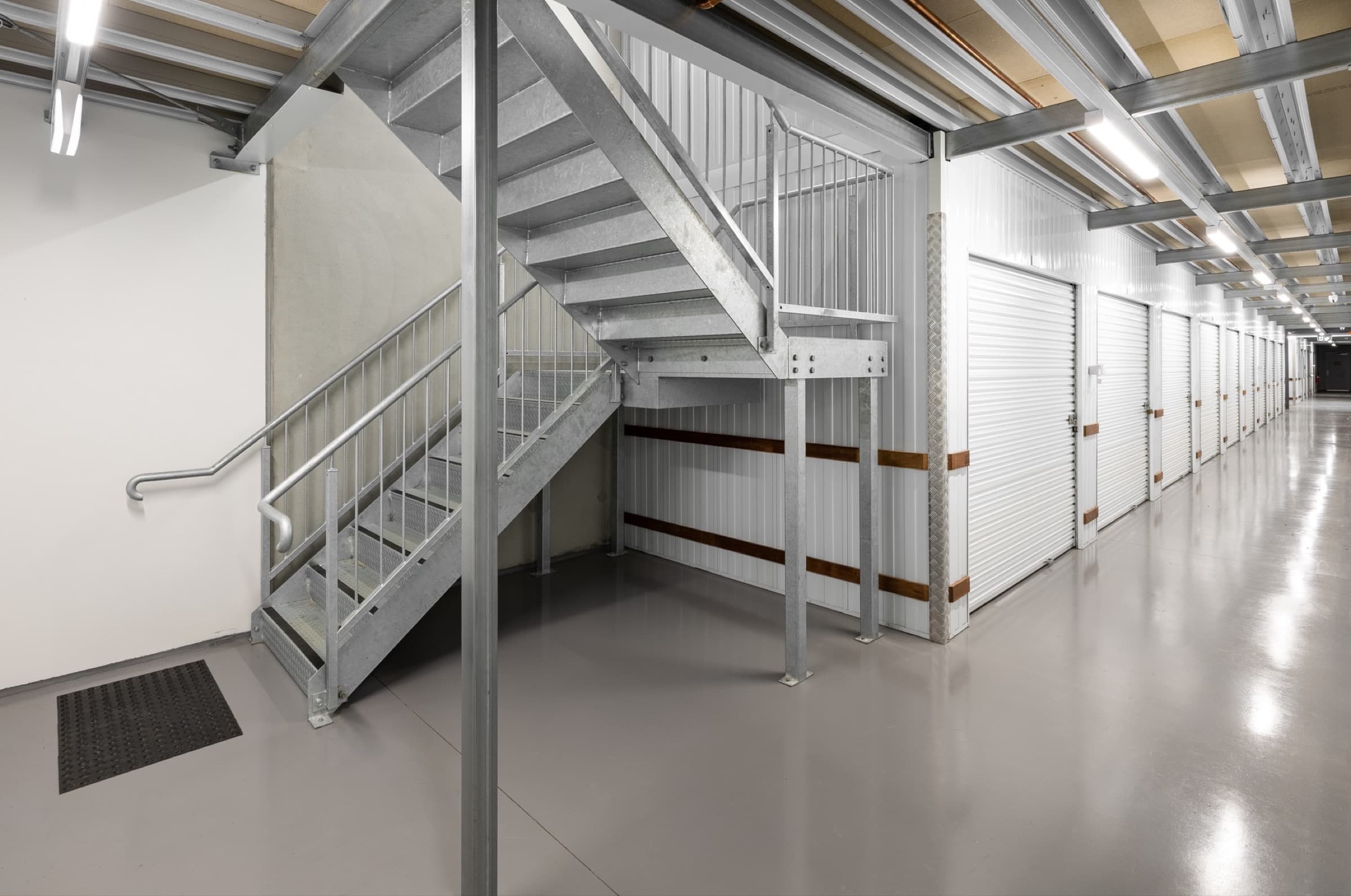
Australia's self-storage industry has matured from a niche real estate category into a A$20 billion institutional asset class. Across approximately 2,590 facilities and 5.85 million square metres of net lettable area, the sector generates an estimated A$2–2.5 billion in annual revenue and supports occupancy rates of 85–90% — significantly above comparable markets in the United States (77%), United Kingdom (75%), and continental Europe (79%).
We have published a comprehensive research paper examining the state and future of the industry. Below is a summary of the key findings.
Market Position
At approximately 2.1 square feet per capita, Australia's self-storage penetration sits at roughly one-quarter of the US level (7.8 sq ft per capita). Even reaching half the US penetration would require nearly doubling existing stock — implying a multi-decade growth runway.
Despite lower per capita supply, Australian storage fees (averaging A$394/sqm per annum) are approximately 33% higher than the US equivalent, suggesting strong pricing power in a supply-constrained market.
Institutional Capital Validation
The year 2025 marked a watershed for institutional capital in Australian self-storage:
- Brookfield-GIC acquired National Storage REIT for A$4.02 billion — Australia's largest real estate take-private transaction
- BlackRock acquired a controlling stake in StoreLocal, targeting a A$2 billion-plus portfolio
- StorHub (Warburg Pincus-backed) launched with US$300 million in equity for Australian expansion
- Barings acquired a 95% stake in Swift Storage
In total, an estimated A$5.36 billion in going-concern deals were recorded across Australasia in 2025 — a record year. Private equity and private investors represented 84% of transactions, a dramatic shift from the historically REIT-dominated market.
Structural Demand Tailwinds
The investment thesis rests on a convergence of demographic, housing, and behavioural drivers:
- Population growth: Australia's population is projected to reach 31.5 million by 2035–36, with net overseas migration averaging 225,000–260,000 persons per year
- Housing undersupply: Completions fell 68,000 dwellings short of demand in 2024 alone, with a 262,000-dwelling shortfall forecast over the Housing Accord period
- Shrinking dwellings: Median capital city lot sizes have fallen 33.8% since 2003, with apartment approvals now representing 42% of total dwelling approvals
- E-commerce growth: Online retail spend reached A$82.6 billion in 2025 (up 14% YoY), driving demand for flexible micro-warehousing
- Ageing population: The 85+ cohort is projected to grow 140% by 2041, generating sustained demand through deceased estate processing and downsizing
Financial Resilience
Self-storage has demonstrated remarkable cap rate resilience through the interest rate tightening cycle. While office and industrial REITs experienced 25–107 basis points of cap rate expansion, self-storage REITs moved only 5–12 basis points — suggesting a superior risk-adjusted profile.
Stabilised facilities trade at 5.0–6.5% cap rates, with established portfolios operating at 87–92% occupancy. The labour-light model delivers operating margins of 68–69% at REIT scale, with 35% of facilities now using remote or technology-blended staffing models.
24-Page Research Paper
Download the Full Report
Our complete research paper covers supply dynamics, demand drivers, financial performance, the investment landscape, macroeconomic tailwinds, risks, and a 5-10 year outlook. Drawing on 69 unique sources including SSAA, ABS, IBISWorld, and ASX filings.
Download Full Report (PDF)This article contains general information only and does not take into account any person's objectives, financial situation or needs. It does not constitute personal advice. Past performance is not an indicator of future returns. Acacia Funds Management Pty Ltd (ACN 694 360 597), Corporate Authorised Representative (001320469) of MSC Advisory Pty Ltd (ACN 607 459 441, AFSL 480649).